The first step
When acompany identifies a need for new software, the default first step is almost always the same: evaluate what's already on the market. This makes intuitive sense: why build something from scratch when a ready-made solution might already exist? But this seemingly logical starting point often leads organisations down a path that costs more, delivers less, and frustrates everyone involved.
The customisation trap
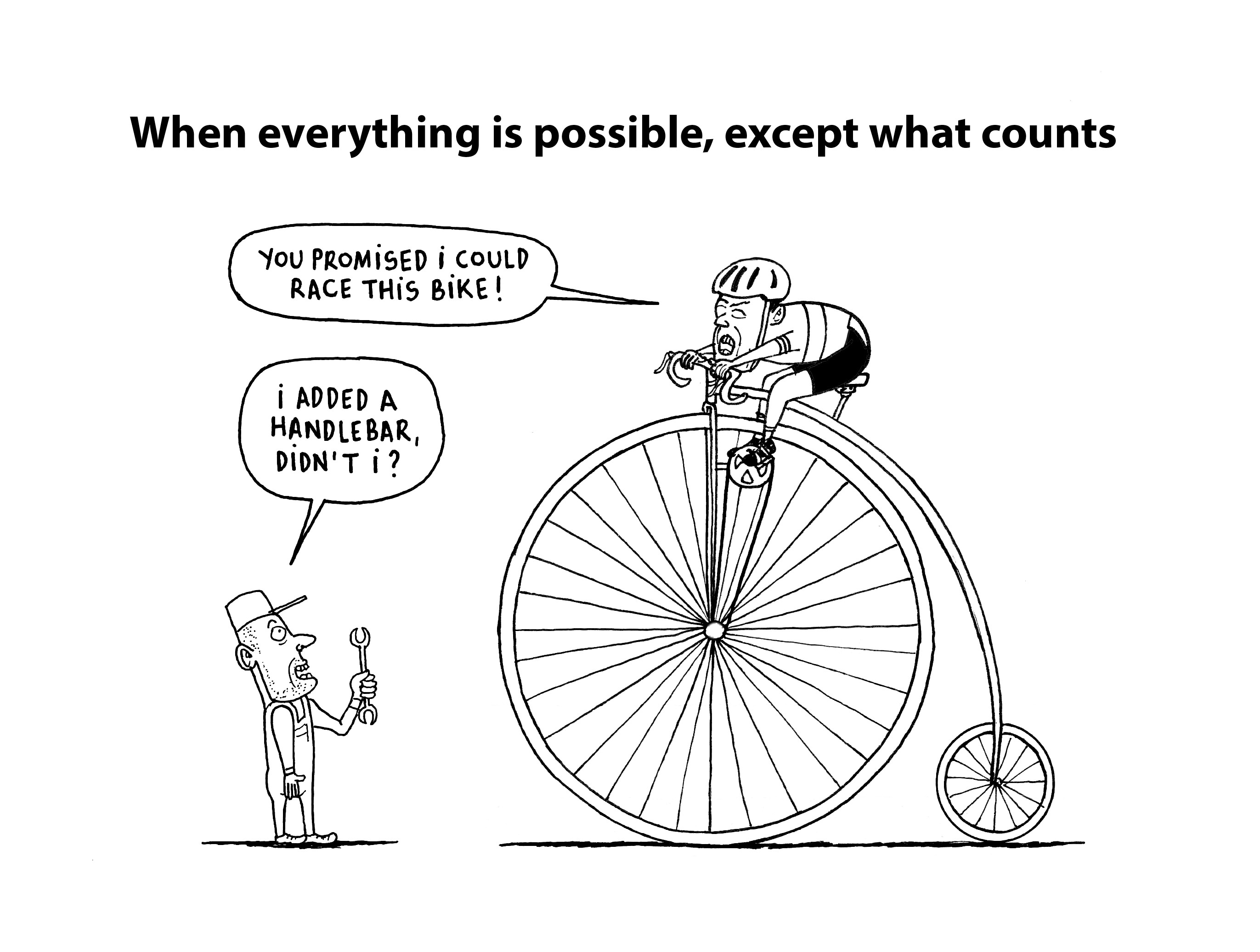
Vendors of existing software packages are nothing if not optimistic. Ask any of them whether their application can be adapted to your specific processes, and the answer will invariably be yes. The reality, however, is far more nuanced. Very few applications are truly usable straight out of the box, and the moment an organisation begins customising an existing package, it risks falling into one of the most common, and costly, mistakes in enterprise IT.
Here's the paradox: when you heavily customise an existing application, you sacrifice the very benefits that made it attractive in the first place, while retaining all of its inherent limitations. Existing applications are built with a fixed architecture and, by definition, limited flexibility. Pushing them beyond their intended boundaries typically results in what can generously be called a 70%solution: a system that technically works but doesn't work well. The inefficiencies this creates breed frustration among users, slow down processes,and ultimately undermine the original business case.
The lesson here is a simple but powerful one: if you choose an existing application,commit to using it in its standard form. If the standard form doesn't adequately support your processes, that's a signal worth taking seriously, not an invitation to start customising it.
The case for custom software
If an off-the-shelf solution in its standard form isn't a good fit, the honest alternative is custom software. Many IT organisations instinctively recoil at this idea, associating it with high costs and project risk. But both concerns deserve some scrutiny.
The cost
On cost,the comparison is rarely as straight forward as it seems. Existing applications often come with per-user, per-year licensing fees, and organisations routinely pay for functionality they never use. It's not uncommon for a business to use barely half of what a platform offers, yet pay for all of it, indefinitely.Custom software, by contrast, can be scoped precisely to what the organisation actually needs. There are no licence fees, no per-seat charges, and no annual renewals. Over time, the economics can look very different from the initial sticker price comparison.
The risk
On risk,the concern is more legitimate but also more manageable than many assume. The perceived risk of custom development largely comes down to one thing: you need to know clearly what you want and how you want it to work. In many organisations, that clarity is genuinely lacking, which is why the"safe" choice, using what everyone else uses, becomes so appealing.But that safety is often illusory. What is rarely factored into the risk equation is vendor lock-in: the gradual dependency on a third-party platform that can, and frequently does, lead to significant price increases over time.Handing control of a core business process to an external vendor is a risk too,just one that tends to arrive quietly and late.
The smarter approach: embracing the grey area
The debate between existing applications and custom software is often framed as a binary choice, but the most successful organisations have moved beyond that framing entirely. They recognise that the spectrum between "buy" and"build" isn't a line with two endpoints, it's a palette, and the best solutions are usually blended.
Inpractice, this means using established off-the-shelf applications for the most standard, commodity processes in the business, where the standard functionality is a genuine fit. For processes that are organisation-specific, complex, differentiating, custom software is developed to match those needs precisely.
The glue that makes this hybrid approach work is integration. By connecting custom-built applications to existing platforms via APIs, organisations can avoid the perennial headache of duplicate data entry and fragmented information. Data entered once flows where it needs to go, and a single source of truth is maintained across the technology landscape.
It's not about choosing sides. It's about choosing wisely and recognising that the right answer is almost always somewhere in between.

